TL;DR
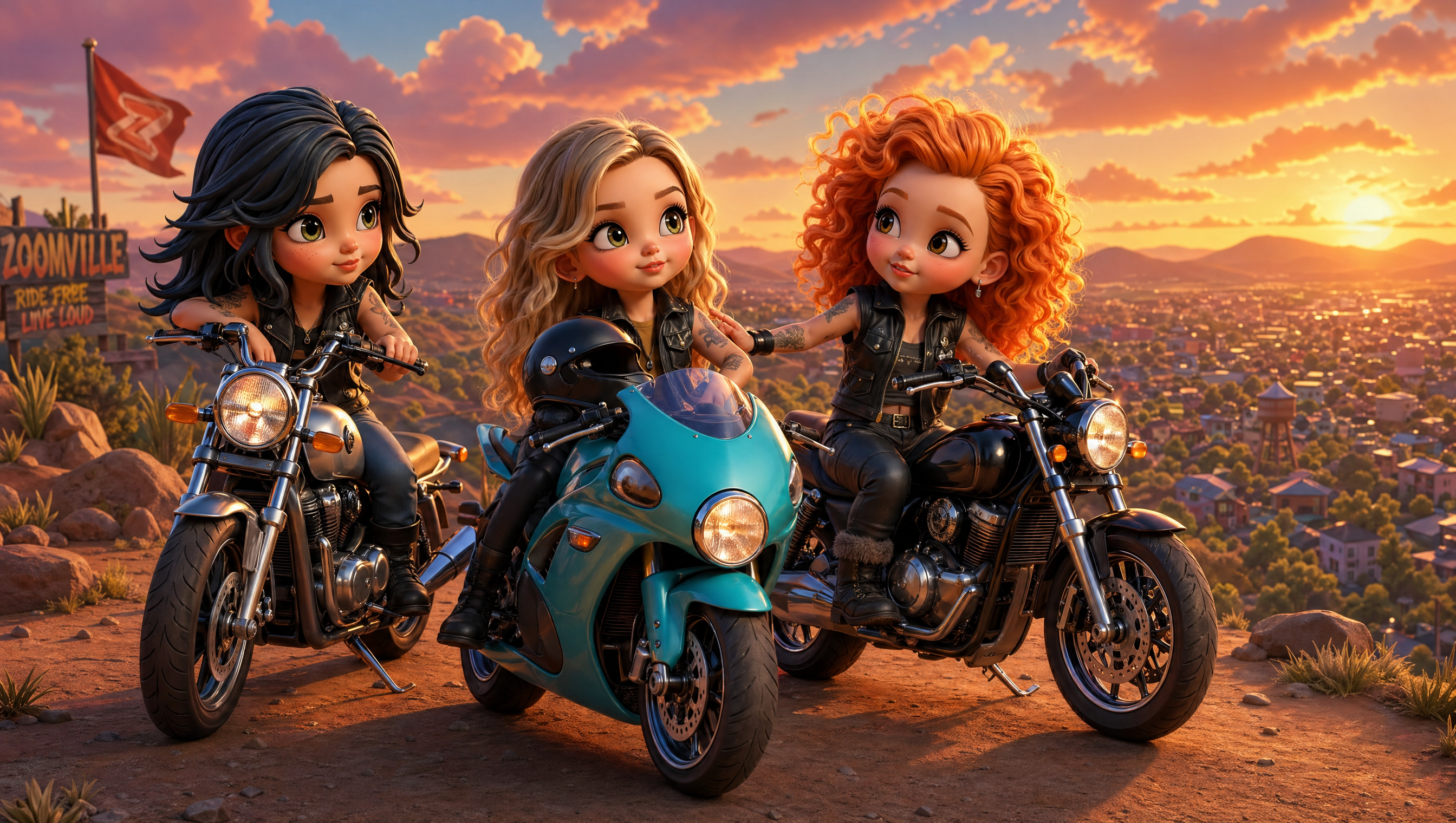
The Biker Babies is a children’s animated series and KDP book franchise created by The Metavision Multimedia Limited for ages 3–7. It follows an eighteen-rider crew — led by a principal six (Maddison, Kai, Amara, Hiro, Logan and Cassidy) and rounded out by twelve specialist riders, plus Turbo Toad as the team’s honorary rider — on adventures that teach friendship, courage, teamwork and curiosity. Unlike the sanitised, committee-designed characters that dominate most preschool content, The Biker Babies were designed from the real world up — around the social and emotional challenges children in this age window are actually navigating. This is the story of how the franchise was built, the thinking behind the crew, and why a children’s IP does not need to be safe to be developmentally sound.
Introduction
Children’s television has a problem that parents notice before children do. Walk down the preschool aisle of any toy shop, scroll through any streaming service’s kids category, and most of what you see has been built the same way: by committees, for demographics, optimised to offend no one and teach very little. The characters are beautifully rendered. The palettes are tested. The hazard assessments are immaculate. And the stories, more often than not, are forgettable.
The Biker Babies was built against that grain.
Created by The Metavision Multimedia Limited, a UK AI-powered creative agency, The Biker Babies is an eighteen-rider children’s franchise for ages 3–7 — animated series on YouTube, illustrated books on Kindle Direct Publishing, and a growing social presence across the platforms parents actually use. It is one of four owned IP properties The Metavision develops in-house as a portfolio of brand assets that also function as a live demonstration of what the agency does for its clients.
This article is the second in our IP & Identity series, examining how each of The Metavision’s four IPs was conceived, designed, and built. The first covered the creative origins of Cats On Crack. This one covers the brand that sits furthest from it in tone — and closest to the everyday experience of the children it is made for.
What The Biker Babies Actually Is
The Biker Babies is an animated series and illustrated book franchise for children aged 3–7, following a crew of eighteen diverse toddler bikers — plus their honorary rider Turbo Toad — on adventures that teach friendship, courage, teamwork, curiosity and kindness.
The crew is built in two narrative tiers, with one extra rider that does not fit either. The Core Six are the principal narrative leads — the riders the first KDP book volumes and pilot animated season are built around. Maddison, the steady leader, the one the others look to when a plan is needed. Kai, the adventurer, always first to the edge of the map. Amara, the empath, the one who notices what others miss. Hiro, the engineer, the problem-solver who loves a puzzle. Logan, the challenger, the one who questions and tests ideas. Cassidy, the connector, the one who brings everyone together.
The wider crew is twelve specialist riders. Each one carries a specific role, temperament and life-experience that the Core Six on their own cannot reach. The wider crew exists so the brand can tell a different kind of story every week without ever repeating a personality.
Turbo Toad is the honorary rider — not a Biker Baby in the literal sense, but adopted by the crew as one of their own. Turbo Toad sits outside the eighteen-rider count and outside the principal-or-specialist hierarchy. He is the team’s mascot-with-agency — present, useful, and frequently a story-engine in his own right.
That structure is not cosmetic. In children’s television, the role of each character is the architecture of the story engine. A crew built to show a single personality eighteen different ways will tell one story eighteen times. A crew built around eighteen genuinely different ways of approaching the world can tell a different story every episode, because every character reaches for a different tool when the same problem arrives.
Why a Wider Crew, Not a Fixed Six
Earlier development cycles for The Biker Babies focused on a Core Six. That number made commercial sense. Six characters is the sweet spot for children’s ensembles — enough variety to teach different lessons, few enough for a child to hold in memory and form favourites.
The Core Six remain the production-hierarchy leads. The first KDP book volumes are built around them. The pilot animated season is structured around them. They are how a child first learns to recognise the world of The Biker Babies.
The decision to expand into a full eighteen-rider crew came from a simple creative observation: the world a 3–7-year-old actually grows up in is much larger than six. A modern preschool friendship group, a family gathering, a nursery classroom — all of these routinely include far more than six personalities. The wider crew was added not to make the brand bigger for the sake of it, but to expand the range of temperaments, abilities, heritages and life experiences the stories can reach.
This matters because preschool-age children are building the foundational mental models of what a social group looks like. A larger, more varied ensemble quietly communicates: you do not have to be one of a fixed six roles. There is room in this world for who you are, even if you are not the leader, the adventurer, the empath, or the engineer.
And then there is Turbo Toad — proof that the team has room for someone who does not fit the structure at all. For a 3–7-year-old, that is a powerful and quietly load-bearing piece of design.
The Design Principle — Built From the Child Outward
Most children’s characters are designed outside-in. A studio decides on a look, a palette, a personality type, and then finds a voice for it. The Biker Babies was designed the other way around. Every character started with a single question: what kind of child, in this age window, is underrepresented in the content they are watching?
Ages 3–7 is the first window in which children are navigating a genuinely complex social landscape. They are figuring out how to work with peers who are different from them. They are learning how to be brave when something is uncertain. They are learning how to be kind when kindness is difficult, how to persist when something is hard, and how to solve a problem by thinking creatively instead of giving up or giving in to frustration.
Every Biker Babies story is built around one of those moments.
That means the characters cannot be interchangeable. A story about persisting through difficulty is told differently through a builder, who persists by making, than through a challenger, who persists by questioning, than through an empath, who persists by noticing what everyone else has missed. The crew is eighteen because the range of ways that children encounter these challenges is wider than any six characters can carry.
Why Diversity Isn’t A Feature — It’s The Foundation
Representation in preschool content is frequently treated as a late-stage decision. A palette gets chosen, a cast gets sketched, and then the question comes up: does this crew look like the children watching?
For The Biker Babies, the sequence runs the other way.
The UK audience for preschool content is one of the most diverse in the world. A nursery class in London, Birmingham, Manchester or Cardiff looks nothing like the cast of children’s programming from two decades ago. The Biker Babies were designed on the understanding that the children watching are already diverse — in heritage, in family structure, in temperament, in ability, in language, in the way their brains work. A franchise that does not reflect that reality does not just fail on inclusion. It fails the much more basic test of being recognisable to its own audience.
So the crew is diverse because the children watching are diverse. It is that simple. What makes the approach distinctive is not that this is said, but that it is done at the level of character design, not at the level of marketing copy. With eighteen riders to populate, the brand had room to do the work properly — every personality, every background, every ability, every way of moving through the world earns its place because a real child somewhere is finding themselves in it.
The Format — YouTube First, Books Second, Brand Everywhere
The Biker Babies launches across two production formats simultaneously.
The animated YouTube series is the primary discovery channel. Short-form animated episodes, each self-contained, each built around one Biker Babies crew dynamic. YouTube is where children in this age window now discover content — both directly and via their parents — and it is the platform that rewards tight, character-led storytelling with repeat viewership.
The Kindle Direct Publishing book series extends each adventure into the bedtime-story territory. Illustrated books, published as a continuous franchise, that parents can read with their children and that children learn to read independently as they grow into the older end of the 3–7 window. The first KDP volumes are built around the Core Six.
The social presence — Instagram, Facebook, YouTube Shorts, TikTok — is designed as a parent-facing layer. It is not children’s content. It is content about children’s content, produced for the parent making the decisions about what their child watches. This is a distinction most preschool franchises miss. Children do not self-select streaming services. Their parents do. A social presence designed to talk past the parent to the child is, commercially, a self-inflicted wound.
How The Metavision Builds An IP Like This
The Biker Babies is, structurally, a demonstration of what The Metavision does for its clients.
A children’s franchise is not a single thing. It is a brand world — a defined cast of characters with consistent personalities, a consistent visual language, a consistent tone of voice, a distribution plan across video, publishing and social, and an editorial rhythm that can sustain audience engagement over years. Most clients commissioning that kind of work with a traditional agency would receive a string of disconnected deliverables. Characters here, a palette there, a pilot episode somewhere else.
The way The Metavision builds its own IP is the same way it builds brand worlds for clients — end-to-end, with AI as the production accelerant and human direction as the strategic spine. The characters are designed, developed and refined in-house. The animation pipeline uses modern AI-enhanced production tools to compress timelines. The books are illustrated in-house, in visual lock-step with the animated series. The entire franchise is held together by a single creative intelligence rather than passed between unrelated teams.
This is what a modern creative agency can look like when AI is not treated as a bolt-on but as a foundational capability. An eighteen-rider children’s franchise with a coherent visual language, a consistent voice, parallel KDP books, a YouTube animated pipeline, and a parent-facing social plan would not exist on this scale, at this speed, without AI in the production stack. It would also not exist at this quality without a creative agency’s strategic judgment sitting over the top of every output.
What’s Coming Next
The Biker Babies is in active development across multiple fronts. The YouTube animated series has pilot episodes in production, launching across the second half of 2026. The KDP book series — illustrated volumes built around the Core Six — is in production and launches in parallel with the animated episodes. The social community at @thebikerbabies launches in May 2026, designed to build the parent audience ahead of the first episode releases. The wider crew rollout — character reveals, individual rider stories, and Turbo Toad’s own arc — will be introduced across the first animated season and supporting social content. And the world of Zoomville, the town the Biker Babies ride out from, will be expanded as its own setting across books, episodes and social storytelling.
Frequently Asked Questions
What is The Biker Babies? The Biker Babies is a children’s animated series and illustrated book franchise for ages 3–7, created by The Metavision Multimedia Limited. It follows an eighteen-rider crew of diverse toddler bikers — plus their honorary rider Turbo Toad — on adventures that teach friendship, courage, teamwork, curiosity and kindness.
Who created The Biker Babies? The Biker Babies was created by The Metavision Multimedia Limited, a UK-based AI-powered creative agency. It is one of four in-house IP properties the agency develops in parallel with its client work.
What ages is The Biker Babies for? The Biker Babies is designed specifically for children aged 3–7. The character design, story structure, and episode length are all calibrated to that developmental window.
Who are the Biker Babies characters? The brand-facing crew is eighteen riders strong, plus Turbo Toad as their honorary rider. The principal narrative leads — known as the Core Six and built around the first KDP book volumes and pilot animated season — are Maddison, Kai, Amara, Hiro, Logan and Cassidy. They are joined by twelve specialist riders who broaden the personality, heritage and ability range of the crew.
Where can I watch The Biker Babies? The animated series launches on YouTube across the second half of 2026. Book volumes will be available via Amazon Kindle Direct Publishing in parallel with the series. Follow @thebikerbabies on Instagram, Facebook and YouTube Shorts for updates.
How is The Biker Babies different from other preschool content? Most preschool content is built outside-in — a studio decides a look and a tone, then builds characters to match. The Biker Babies was built inside-out, around the specific social and emotional challenges children in the 3–7 window are navigating. Every character — from the Core Six, to the wider specialist crew, to Turbo Toad — exists because a real developmental need exists.
Conclusion
The Biker Babies is a children’s franchise built against the grain of how most preschool content gets made. It is not designed to offend no one. It is designed to teach something. It is not built around a committee’s guess at what children will respond to. It is built around what real children in a real age window genuinely encounter — in their friendships, in their families, in the first social landscape any of us ever navigate.
Building an IP like this — at this scale, at this quality, at this speed — is possible because The Metavision uses AI not as a replacement for creative judgment but as a multiplier for it. Characters, stories, books, animations, social strategy and brand voice are all held together by a single creative intelligence. That is what a modern creative agency looks like.
If you are building a brand world of your own — a children’s franchise, a consumer brand, or a portfolio of creative assets — and the disconnected-deliverables model most agencies still run is not what your project actually needs, we would like to hear what you are building. Explore our Content Creation service, or if you are further along and want a conversation about your own brand world, book a 30-minute discovery call — no pitch, no pressure.