There is a category of AI release that generates noise because the benchmark numbers are impressive. And there is a category of AI release that changes something real about how creative work gets made. Seedance 2.0, released by ByteDance in February 2026, falls into the second category — and if you are a filmmaker, animator, brand content producer, or creative director, it is worth understanding why.
This is not a spec review. It is an honest assessment of what this model changes, what it does not, and what it means for creative professionals navigating a landscape that is moving faster than most studios and agencies can comfortably track.
TL;DR — What Seedance 2.0 Is
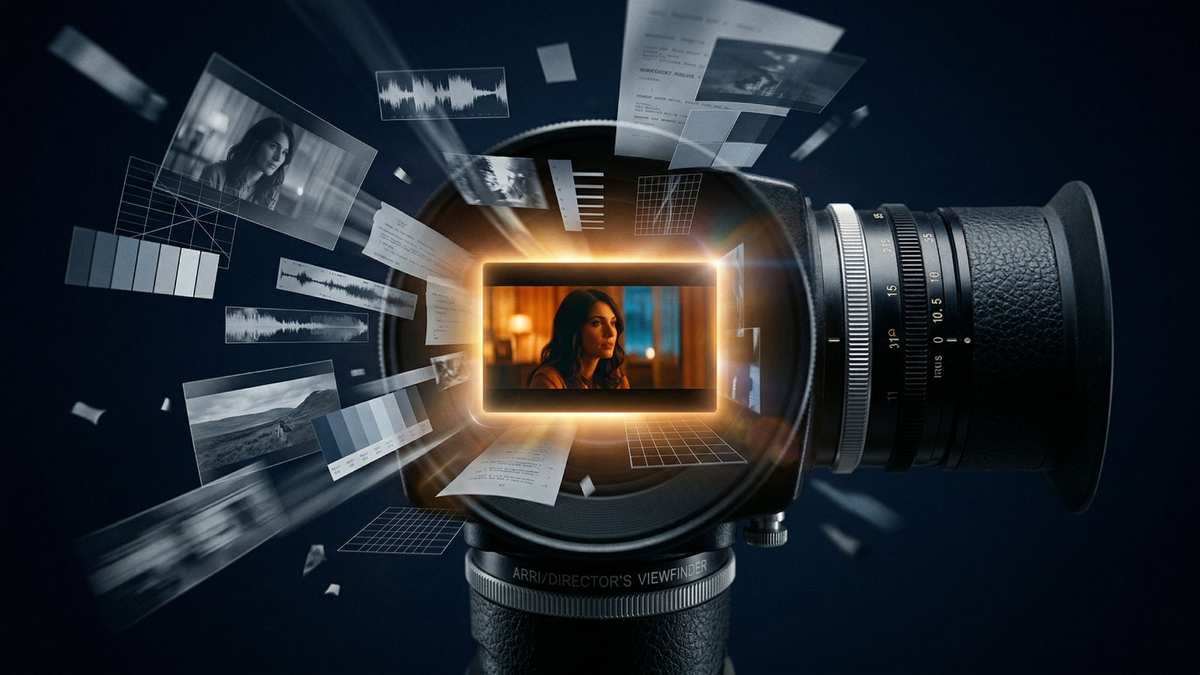
Seedance 2.0 is ByteDance's multimodal AI video generation model — meaning it accepts text, images, video, and audio simultaneously as creative inputs, and generates video output up to 2K resolution with natively synthesised audio. It builds on its predecessor with significantly stronger character consistency, a 30% improvement in generation speed, and what ByteDance describes as a "quad-modal" input architecture: up to 12 reference files at once, combining a style image, a motion reference video, an audio track, and a text prompt to produce directed, coherent output.
The result is a model that is less about generating something from nothing and more about assembling a directed output from references you supply — which is a meaningful distinction.
What Has Actually Changed
Creative direction is now the primary skill, not technical execution.
The previous generation of AI video tools required you to be fluent in prompt engineering — learning the specific language that produced the results you wanted. Seedance 2.0's multimodal reference system changes the workflow fundamentally. You are no longer trying to describe your vision in words. You are supplying a style image to establish visual tone, a reference video clip to define camera movement and pacing, and an audio file to drive rhythm and sync. The AI assembles your direction. The skill that matters is the quality of your creative references, not the precision of your prompting.
For experienced creative professionals, this is a much more natural workflow. It mirrors how a director briefs a cinematographer, or how a brand creative briefs an animator — using references and mood boards rather than technical instructions.
Pre-visualisation is now production-quality.
One of the most significant shifts Seedance 2.0 enables is the collapse of the gap between pre-vis and final output. Indie filmmakers, animation directors, and brand content teams can now produce 2K pre-visualisation that is close enough to final quality to be used in client presentations, pitch decks, and concept approvals — without committing to full production budgets. The decision to shoot or animate is increasingly made with a high-fidelity reference in hand rather than a storyboard.
This changes how production is scoped, how clients approve creative concepts, and how budgets are justified.
Character consistency has crossed a threshold.
Previous AI video models struggled to maintain consistent character appearance across shots — the same character would shift subtly in facial structure, clothing detail, or skin tone between cuts, making branded character work unreliable. Seedance 2.0's character consistency is significantly improved. Facial features, clothing, and visual style remain coherent across a 15-second generation that includes multiple shots and natural cuts.
For brand content teams managing IP characters or spokesperson-led video content, this is the change that makes AI video generation genuinely usable rather than merely interesting. Consistent characters mean consistent brand identity. That has not been reliably achievable until now.
Audio is no longer an afterthought.
Seedance 2.0 generates audio natively alongside video — dialogue with precise lip synchronisation, sound effects timed exactly to action, and audio-visual beat matching that allows music to drive the rhythm of the visual edit. Previous workflows required audio to be added in post as a separate process. When the model generates a character speaking, the lip sync is built in.
For anyone producing branded video content, testimonials, animated brand characters, or short-form advertising, this eliminates a post-production step that was previously both time-consuming and imprecise.
What It Does Not Change
Seedance 2.0 does not replace creative judgement.
The reference-based workflow is more powerful than prompt engineering — but it still requires a creative professional to know what good looks like, to make decisions about tone, pacing, visual style, and narrative structure. The model synthesises what you give it. If your references are generic, your output will be generic. The quality ceiling is still set by the person directing the work.
It does not replace production for complex or live-action work.
For productions requiring real environments, real people, or specific physical performances, AI video generation remains a tool for pre-visualisation and supplementary content rather than a primary production method. The 15-second generation limit and the current handling of complex multi-character interactions mean that long-form or high-performance-dependency work still requires conventional production approaches.
It does not make brand strategy redundant.
The ability to produce high-quality video at speed makes brand consistency more important, not less. When generating capacity increases, the question of what your brand actually looks like — what visual tone, what character, what world — becomes more consequential. Brands without clear visual identity frameworks will produce a high volume of incoherent content faster than ever before.
If you'd rather have AI video production handled end-to-end, The Metavision's Content Creation service does exactly that.
What This Means for The Metavision's Clients
For businesses producing video content, the implication is straightforward: the cost and time barriers to high-quality video have dropped significantly, but the strategic and creative layer has not. What you need now is a clearer brief and a more rigorous brand identity — not less of both.
At The Metavision, we work with tools like Seedance 2.0 as part of our content creation workflow — using AI generation for pre-visualisation, concept approval, and scalable brand video content, while applying the creative and strategic layer that makes AI-generated content look and feel like it belongs to a specific brand rather than a prompt.
If you are exploring what AI video generation could do for your content programme, or what it would take to use tools like this with confidence rather than uncertainty, a discovery call is the right starting point.
FAQ — Seedance 2.0 for Creative Professionals
What is Seedance 2.0?
Seedance 2.0 is ByteDance's multimodal AI video generation model, released in February 2026. It accepts text, images, video, and audio as simultaneous inputs — up to 12 reference files — and generates video output at up to 2K resolution with natively synthesised audio including precise lip synchronisation. It is designed for directed creative output rather than open-ended generation from text prompts alone.
How is Seedance 2.0 different from previous AI video tools?
The key difference is its multimodal reference architecture. Where earlier models required text prompts to describe desired output, Seedance 2.0 allows creative professionals to supply style images, motion reference videos, and audio tracks simultaneously. This produces more directed, consistent output and maps much more closely to how experienced creatives already work with references and mood boards.
Can Seedance 2.0 maintain consistent characters across a video?
Yes — character consistency is one of the model's most significant improvements over its predecessors. Facial features, clothing details, and visual style remain coherent across multi-shot generations of up to 15 seconds. This makes it viable for branded character work and spokesperson-led content in a way that earlier models were not.
Does Seedance 2.0 generate audio as well as video?
Yes. Seedance 2.0 generates audio natively alongside video, including dialogue with lip synchronisation and sound effects timed to on-screen action. Audio-visual beat matching is also supported, allowing music to drive visual editing rhythm. This eliminates what was previously a significant post-production step.
What do creative professionals still need that Seedance 2.0 cannot provide?
Creative judgement, brand strategy, and directing capability are not replaced by any current AI video model. Seedance 2.0 synthesises what you give it — the quality of the output is determined by the quality of the references and creative decisions supplied. Professionals who understand visual storytelling, brand identity, and audience will produce significantly better results than those treating it as an automated solution.